
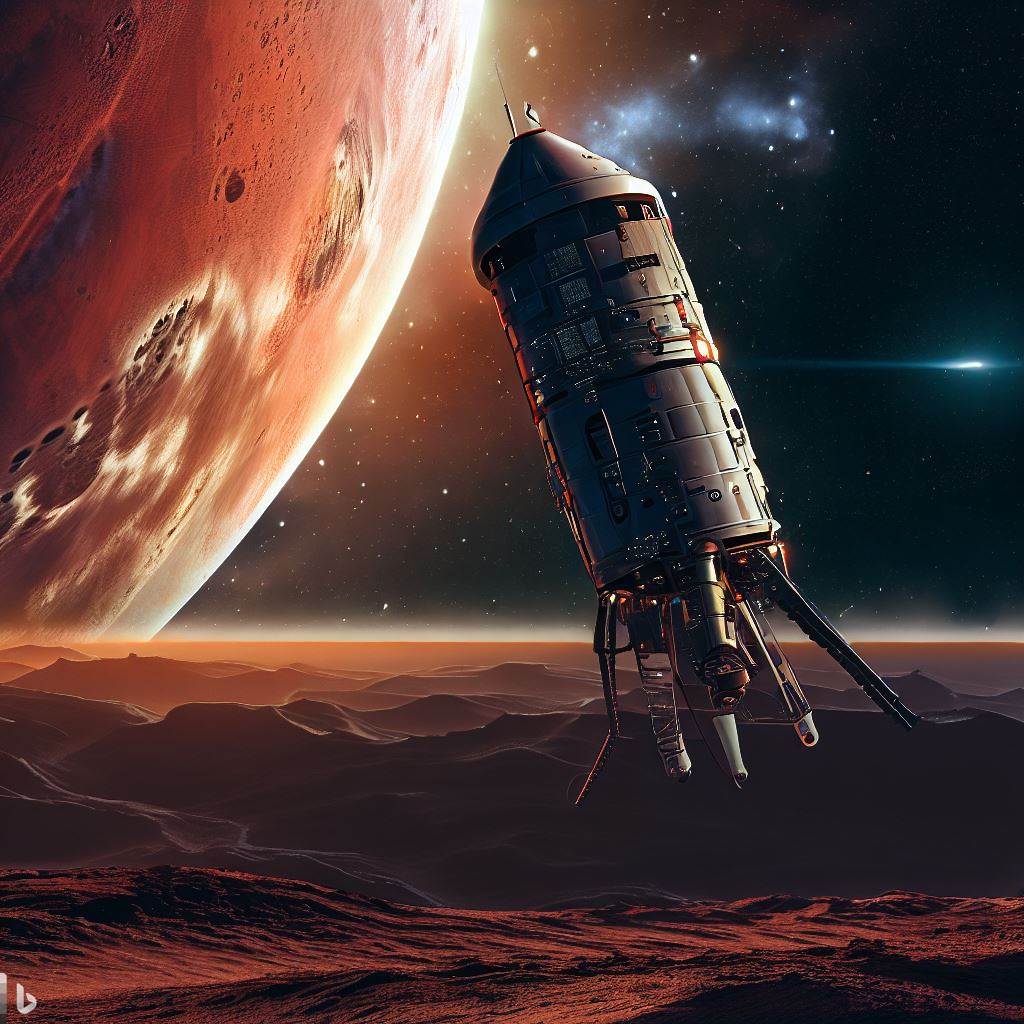
Embarking on a journey to Mars is no simple feat. It’s a complex, intricate process that involves a deep understanding of space travel, physics, and the harsh realities of the cosmos. Yet, the allure of the Red Planet is irresistible to those of us who are captivated by the mysteries of the universe.

In this blog post, “How to Travel to Mars,” we will attempt to unravel the complexities of Martian travel in a way that’s easy to understand, even if you’re not a rocket scientist. We’ll explore the different methods of reaching Mars, the challenges of landing and surviving on its surface, and the potential rewards that make this daunting journey worthwhile.
As a space enthusiast, I am thrilled to guide you through this fascinating topic. We’ll delve into the specifics of direct ascent and Hohmann transfer orbits, discuss the pros and cons of powered descent and soft landing, and even touch on the potential for future colonization.
Remember, while the journey to Mars is currently a topic for scientists and astronauts, with the rapid advancements in technology, it may not be long before it becomes a reality for the rest of us. So, let’s embark on this cosmic journey together, and explore what it would take to travel to Mars.
Traveling to Mars, the fourth planet from the Sun, is a long and intricate journey. The distance between Earth and Mars, often referred to as the “Earth to Mars travel time,” varies depending on the positions of the two planets in their orbits around the sun, but it is typically about 55 million miles (89 million kilometers). This means that it takes about six months to travel between the two planets, a duration often questioned as “how long to travel to Mars?”
There are two main ways to travel to Mars:
- Direct ascent: This involves launching a spacecraft directly from Earth to Mars. This is the fastest way to travel to Mars, but it requires a very powerful rocket.
- Hohmann transfer orbit: This involves launching a spacecraft into a specific orbit around the sun that will allow it to rendezvous with Mars. This is a slower way to travel to Mars, but it requires less fuel.
Once a spacecraft is en route to Mars, it must survive the journey through space. This includes the harsh radiation environment of space, the lack of atmosphere, and the extreme temperatures. The spacecraft must also be able to land safely on Mars.
There are two main ways to land on Mars:
- Powered descent: This involves using rockets to slow down the spacecraft as it approaches Mars. This is the most common way to land on Mars.
- Soft landing: This involves using airbags or other devices to cushion the impact of the spacecraft as it lands on Mars. This is a more complex way to land on Mars, but it can be safer for the crew.
Once a spacecraft has landed on Mars, the crew can begin their mission. The mission could involve exploring the surface of Mars, collecting samples, or conducting experiments. The crew would also need to find a way to survive on Mars, which would involve finding food and water, and protecting themselves from the harsh environment.
Traveling to Mars is a challenging and dangerous journey, but it is also an exciting and rewarding one. With advances in technology, it is becoming more and more feasible to travel to Mars. In the future, it may be possible for people to travel to Mars for exploration, research, or even colonization.
Here are some additional things to consider when traveling to Mars:
- The cost of traveling to Mars is very high. It is estimated that it would cost billions of dollars to send a crew to Mars.
- The risks of traveling to Mars are also high. The crew would be exposed to radiation, the lack of atmosphere, and the extreme temperatures. There is also the risk of accidents or technical problems.
- There is no guarantee that a crew would be able to survive on Mars. The crew would need to find a way to produce food and water, and protect themselves from the harsh environment.
Despite the challenges and risks, traveling to Mars is a goal that many people are working towards. With advances in technology, it may be possible to travel to Mars in the near future.
As we conclude our journey through this blog post, “How to Travel to Mars,” it’s clear that the voyage to the Red Planet is not just a dream, but a complex, multi-faceted challenge that humanity is striving to conquer. From understanding the vast distance between Earth and Mars, the intricacies of space travel, the landing techniques, to survival strategies on Mars, we’ve covered it all. The high costs, the risks, and the sheer audacity of this endeavor make it a thrilling prospect for the future of space exploration. Despite the uncertainties, the quest to travel to Mars continues to inspire scientists, researchers, and dreamers around the globe. As we stand on the cusp of technological advancements, the dream of setting foot on Mars is becoming more tangible. So, as we look to the stars, we continue to ask not if, but how we will make the journey from Earth to Mars. Until that day comes, let’s keep exploring, dreaming, and pushing the boundaries of what’s possible.




Leave a Reply