
The universe is a vast, mesmerizing expanse that has always fascinated mankind. With the advent of technology, we have been able to explore and understand it better. One such technological marvel that has significantly contributed to our cosmic knowledge is the James Webb Space Telescope. This article delves into the “Best James Webb Images” that have been captured by this extraordinary telescope.
These images are not just aesthetically pleasing, but they also provide valuable insights into the mysteries of the universe. From distant galaxies to nearby nebulae, the best James Webb images have transformed our understanding of space. They have allowed us to witness the beauty of the cosmos like never before, making us feel both humbled and awestruck by the grandeur of the universe.

- SMACS 0723 – This image is a deep field view of the universe, showing galaxies that are billions of light-years away. It is the deepest and sharpest infrared image of the early universe ever taken.

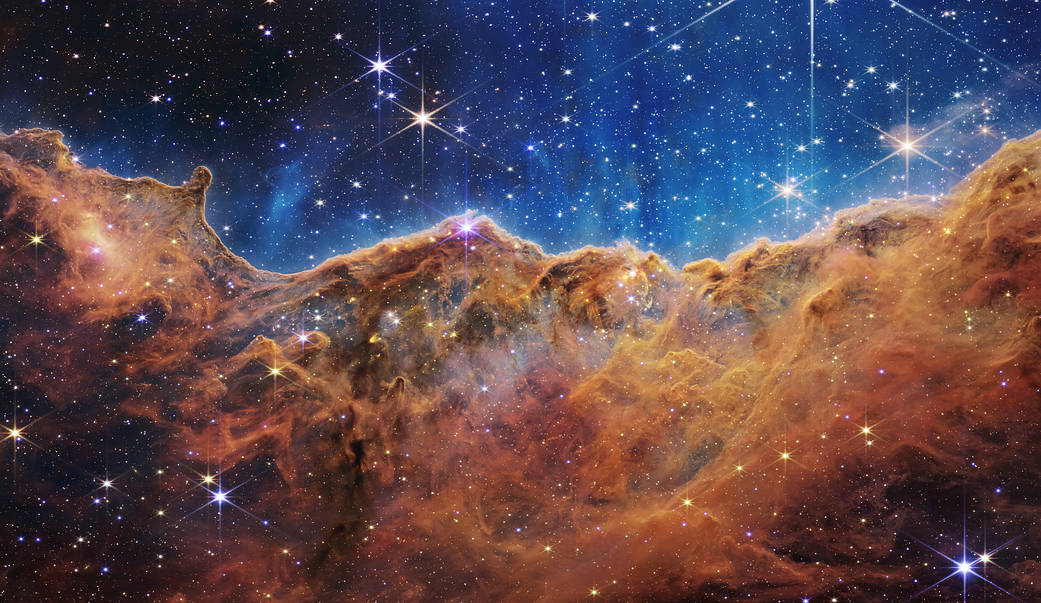
- The Carina Nebula – This image shows a giant cloud of gas and dust in the Carina Nebula, which is located about 7,600 light-years from Earth. The nebula is home to many young stars, including some that are still forming.

- Stephan’s Quintet – This image shows a group of five galaxies that are interacting with each other. The galaxies are located about 290 million light-years from Earth.

- WASP-96 b – This image shows the atmosphere of an exoplanet called WASP-96 b. The exoplanet is located about 1,150 light-years from Earth.

- Southern Ring Nebula – This image shows a dying star, also known as a planetary nebula. The nebula is located about 2,000 light-years from Earth.

- Abell 2744 – This image shows a galaxy cluster, which is a group of galaxies that are gravitationally bound together. The galaxy cluster is located about 4 billion light-years from Earth.

- Stephan’s Quintet: Mid-Infrared – This image shows Stephan’s Quintet, a group of five galaxies, in mid-infrared light. The image reveals new details about the galaxies, including their individual structures and their interactions with each other.

- NGC 3324 – This image shows a star-forming region in the Carina Nebula. The region is called NGC 3324, and it is home to many young stars that are still forming.

- The jellyfish galaxy is so named because of its long, trailing arms. The arms are made up of gas and dust, and they are being pulled out of the galaxy by the gravitational forces of a nearby galaxy. The image from Hubble shows the jellyfish galaxy in great detail, revealing its complex structure and its dusty environment.

- Holmberg 15A – This image shows a galaxy that is being torn apart by the gravitational pull of its neighbor, a massive elliptical galaxy. The galaxy is called Holmberg 15A, and it is located about 400 million light-years from Earth.
These are just a few of the many amazing images that the James Webb Space Telescope has taken. The telescope is still in its early stages of operation, and scientists are excited to see what other discoveries it will make in the years to come.




Leave a Reply